London, 18 August 2026:
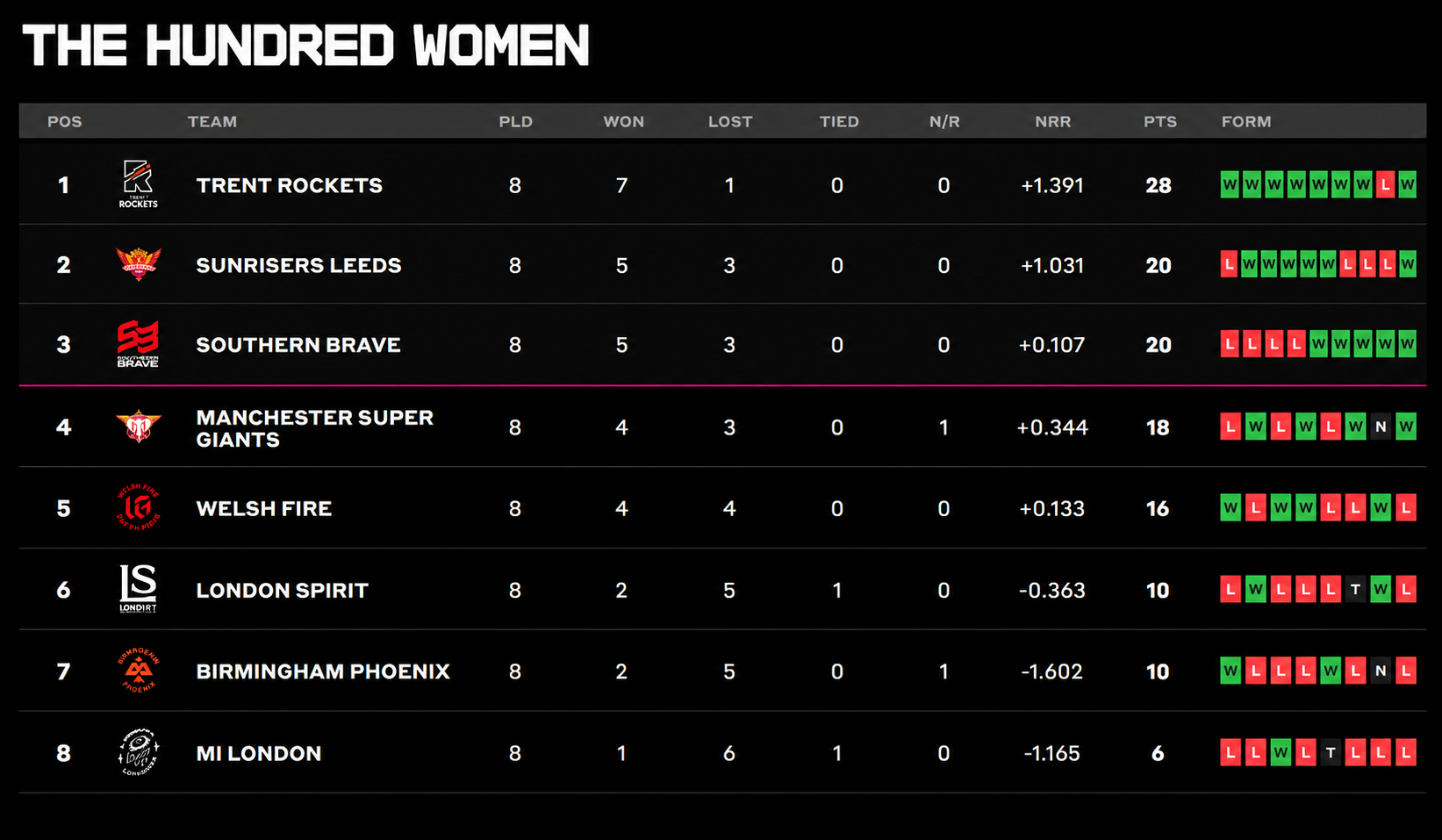
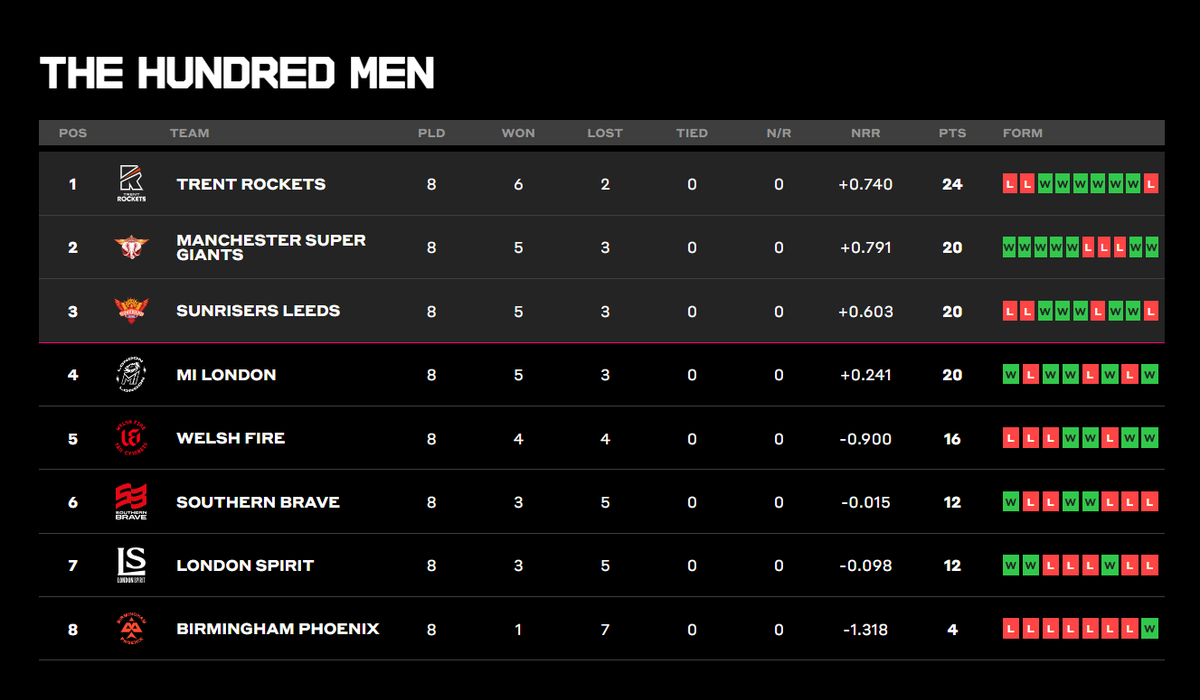
The Manchester Super Giants produced an upset on Sunday evening as they beat the group leading Trent Rockets to take home their first Hundred title.
After amassing five wins in the group stage, they became just the second team to win after coming through the Eliminator, the first being the Southern Brave in the inaugural edition of The Hundred.
Our correspondent Ed Mace does the statistical review of the tournament.
Batting comes in threes
The two most explosive batting sides in the competition this year were the two teams battling it out in the Eliminator. Eventual winners MSG and Sunrisers Leeds combined for six of the highest ten scores in the tournament, including a Hundred record of 241-2 from Sunrisers against the London Spirit. On top of that, three batsmen represented both MSG and Sunrisers in the top ten individual scorers.
Mitch Marsh led the overall scoring with 416 runs from nine games including 29 sixes, the most in any edition of The Hundred. His opening partner Ryan Rickelton was in third place, behind Tim Seifert who hit an unbeaten 80 off 40 to qualify for the Eliminator before scoring another 72 in the final. Seifert struck five half-centuries which also marked a record for The Hundred.
Jos Buttler and Harry Brook were perhaps expected to feature in the top ten given their brilliant T20 batting for England in the past, but the more remarkable story is that of Paul Walter who made ninth on the list after just five games. His 247 runs were crucial to MSG’s win and they came at a tournament leading average (amongst players with over 150 runs) of 61.75 and a strike rate of 178.98.
Building the line-up around three powerful batsmen might be the move going forward; the days of the anchor in The Hundred might truly be over.
Pace the way forward?
Despite the heat and the success of spinners in the women’s tournament, the top five wicket takers in the men’s edition were all pace bowlers. It was another trio for MSG as Josh Tongue, Sonny Baker and Gus Atkinson all featured in the top five, alongside Richard Gleeson and Brydon Carse. These are all bowlers who can reach 90mph but it was their variations that would often get their wickets.
Interestingly, none of those five appeared in the top ten of the bowlers with the best economy rates. Adil Rashid topped that list, going at 5.16 runs per set of five balls while also picking up 11 wickets. He is perhaps the exception in a trend that suggests taking the wickets is prioritised over keeping things as tight as possible, something Jos Buttler spoke regularly about as captain for MSG.
Don’t splash the cash
With the tournament finished, it’s interesting to look back at the auction and see where value was really acquired and where the salary cap was spent more rashly.
The most expensive retention was Harry Brook who stayed with Sunrisers for a salary of £465,000. However, just £15,000 behind him was Phil Salt who struggled throughout the tournament. There were no shortage of overpays in this year’s Hundred, with players seemingly having their value inflated for inexplicable reasons.
The victorious Super Giants picked up Baker and Atkinson for under 100k each despite all three making plenty of England appearances. Their batting heroes also came at bargain prices with Seifert going for 100k and Paul Walter going for just 31k.
Such is the volatility of short-form cricket that big spending should be reserved for the rare crop of players who are true guarantees. The rest of the squad can be organised so effectively in the lower tiers of the auction, proven by MSG this year and will no doubt be followed by the other franchises looking to emulate their success.