Lahore, 21 December 2025:
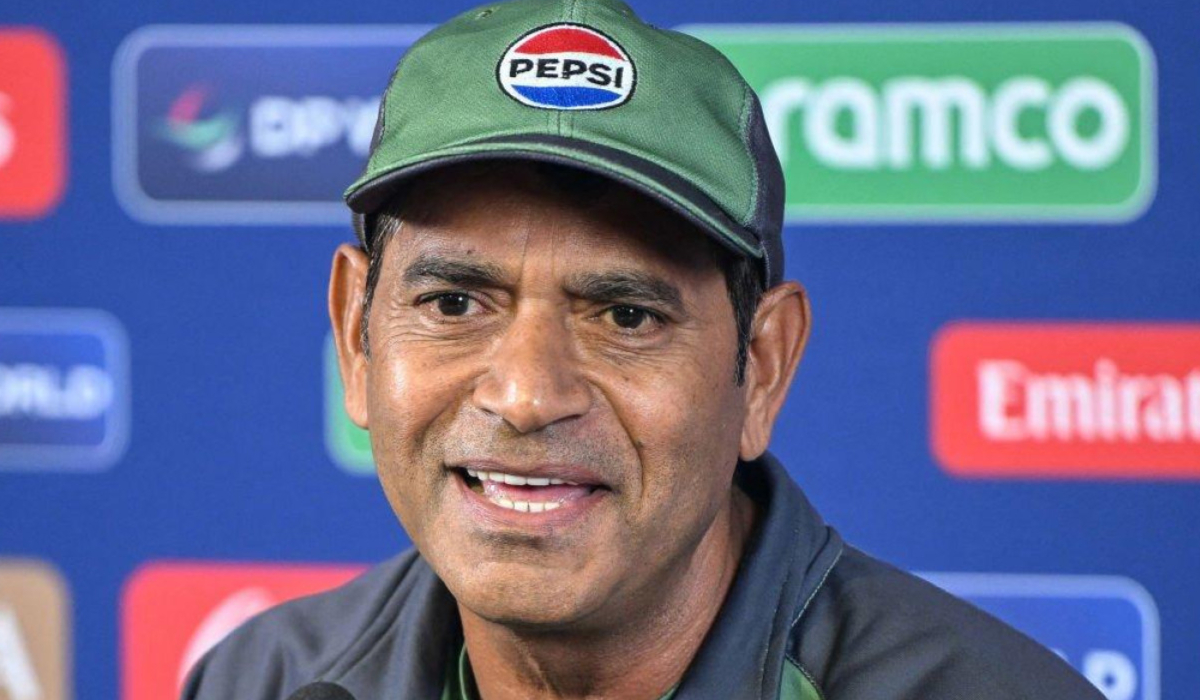
Former Pakistan fast bowler and current Director High Performance Aqib Javed says clarity, accountability and long-term planning are central to Pakistan cricket’s future, as he reflected on his journey and the game’s evolving demands during the 68th episode of the PCB Podcast.
Aqib traced his path from international cricketer to selector, head coach and high-performance administrator, describing his early retirement and transition into coaching as a conscious choice driven by development rather than position.
“Clarity is very important,” Aqib said. “I was the youngest cricketer to play for Pakistan and one of the youngest to retire. I was not even 28 when I left cricket and in 2000 I decided to move into coaching.”
At the time, he said, Pakistan lacked a professional coaching framework, prompting the creation of locally designed syllabi and structured coaching pathways.
“We did not have a professional coaching setup then,” he said. “We learned the system, developed our own syllabus and designed coaching courses according to our culture and conditions, with clear levels and progression.”
Aqib described both playing and coaching as continuous tests, where progress comes only through persistence and patience.
“If you see things as a process, it becomes easier,” he said. “Nothing meaningful happens without hurdles. Getting into the team is one thing, but staying there for 10 years means you are tested every day.”
Addressing criticism that follows poor results, Aqib said scrutiny is an unavoidable part of professional sport.
“If you don’t perform, there will be criticism,” he said. “This is a natural reaction. In 1996, the way we performed, people had every right to criticise, just as they do now if results are not good.”
He added that accountability eventually asserts itself regardless of personal acceptance.
“Whether you accept it or not, the system makes you accountable,” Aqib said. “As a player, coach or selector, if performance is not there, the system moves on.”
Reflecting on his return to the Pakistan Cricket Board after more than a decade, Aqib said he had no initial desire to rejoin but was persuaded by the leadership’s intent to reform.
“I met the chairman and felt that he genuinely wanted to do something,” he said. “I didn’t come back to be a selector or a coach. I came back because I wanted to work on development.”
Aqib credited PCB Chairman Mohsin Naqvi for backing long-term thinking and decisive action, particularly in areas often neglected in the past.
“He doesn’t interfere in selection,” Aqib said. “He asks you to look carefully, take more time and think deeply. That courage to make decisions is very important.”
On selection matters, Aqib acknowledged past shortcomings but said Pakistan cricket is now in a healthier position.
“For several years, Pakistan had forgotten how to win at home,” he said. “One of the reasons was selection. The truth is, teams were not selected well, and results suffered.”
He stressed that strong teams are built on player depth rather than personalities.
“We often think the coach or captain makes the team,” he said. “But the core of any successful team is the quality of players. The stronger the pool, the tougher the selection and the better the team.”
As Director High Performance, Aqib outlined a restructured academy system focused on infrastructure, defined roles and clear pathways.
“Facilities and infrastructure run your system,” he said. “Without them, you cannot prepare players for international cricket.”
Under the revamped model, Lahore focuses on national team bench strength, Karachi on women’s cricket, Multan on U19 development, while Faisalabad and Sialkot cater to U17 and U15 age groups.
Aqib also detailed efforts to reconnect domestic cricket with player development through regional academies, nationwide outreach and technology-driven monitoring.
“We are reaching out to 107 districts,” he said. “Talent should not come to us — we should go to the talent.”
A centralised athlete management system, he added, ensures consistency in coaching, assessment and player tracking across the country.
Discussing match readiness, Aqib highlighted reforms in pitch preparation aimed at producing adaptable cricketers.
“For years, we played on road pitches,” he said. “Now we are introducing varied surfaces grass, seam, batting and turning phases so players are trained for real international challenges.”
Looking ahead, Aqib expressed confidence in Pakistan’s direction, citing improved bench strength, growing competition and recent performances as positive indicators.
“This is a good phase for building confidence and combinations,” he said. “The indicators are improving, and this period is important for preparing for major tours and future world events.”